Can I Keep My Cat If I'm Allergic? A Practical & Medical Guide
Newly diagnosed with a cat allergy? Learn how to safely keep your cat using medical treatments, home management routines, and diet controls without rehoming.

Receiving a positive diagnosis from an allergist can feel heart-wrenching. The immediate fear for most cat owners is that they will be forced to choose between their personal health and rehoming a beloved family member.
The short answer is: Yes, in the vast majority of cases, you can safely keep your cat.
Unless you experience severe, life-threatening allergic reactions (such as unmanageable allergic asthma or anaphylaxis), modern feline nutrition, medical therapies, and targeted environmental controls allow millions of allergic cat owners to live comfortably alongside their pets.
Here is a practical, step-by-step framework to help you navigate living with a cat allergy without saying goodbye to your feline companion.
The Decision Matrix: Assessing Your Safety & Options
| Symptom Severity | Typical Physical Reactions | Can You Safely Keep Your Cat? | Primary Action Required |
|---|---|---|---|
| Mild | Mild sneezing, occasional runny nose, slight eye itching | Yes (100%) | Basic environmental controls & OTC antihistamines |
| Moderate | Frequent congestion, localized hives, persistent itchy eyes | Yes (High Success Rate) | Anti-Fel d 1 diet, HEPA filtration, daily nasal sprays |
| Severe / Asthmatic | Wheezing, chest tightness, severe asthma attacks, facial swelling | Requires Specialist Care | Consult a board-certified allergist immediately; evaluate immunotherapy |
Understanding Why You Don't Have to Rehome
When doctors suggest getting rid of a pet, it is often because rehoming is the simplest theoretical way to remove an allergen source. However, allergists who specialize in pet sensitivities recognize that emotional well-being is vital—and that complete eradication of the allergen is rarely necessary to achieve symptom relief.
Your body triggers an allergic response when exposure to the Fel d 1 protein passes your personal allergic threshold. The goal of managing cat allergies is not to achieve 100% sterile isolation, but to lower the overall allergen volume in your environment below the point where your immune system triggers a reaction.
Read our deep dive on what causes cat allergies to understand the exact biological mechanics of feline proteins.
4 Pillars of Living Comfortably with a Cat Allergy
To successfully lower your allergen exposure below your reaction threshold, deploy a combined 4-part management strategy:
1. Neutralize Salivary Proteins at the Source
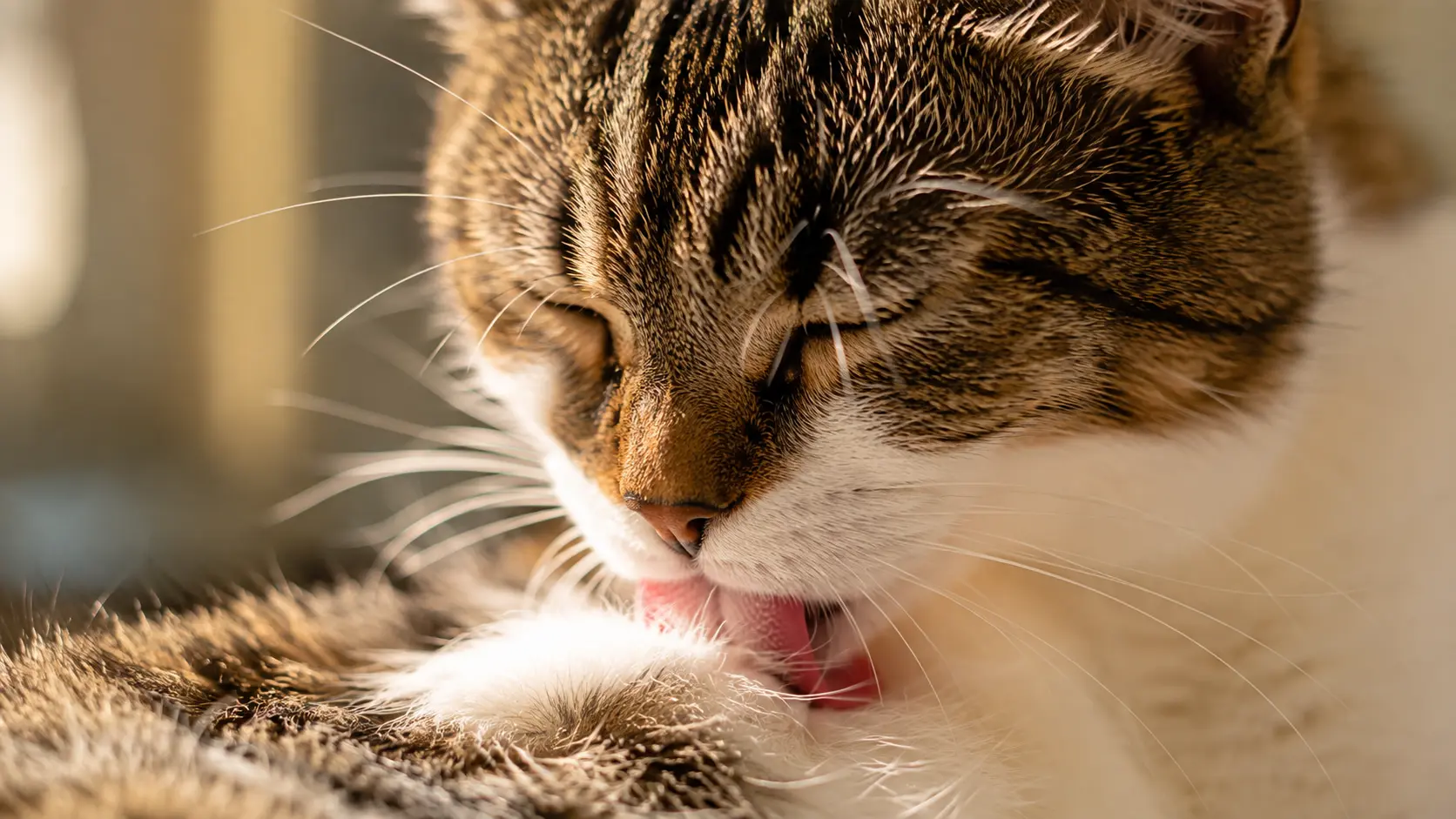
The most significant advancement in pet allergy management is dietary control. Feeding your cat an anti-Fel d 1 diet (such as Purina Pro Plan LiveClear) binds to and neutralizes active salivary proteins in their mouth as they groom, reducing the potency of dried dander by up to 47%.
2. Safeguard Your Sleep (The Bedroom Sanctuary)
You cannot manage your allergies effectively if your immune system is fighting dander for eight hours every night.
- Establish a strict rule: No cats in the bedroom at any time.
- Encase your mattress and pillows in micro-porous allergen-barrier covers.
- Run a continuous True HEPA air filter on your nightstand or dresser.
3. Clear Airborne and Surface Dander
Because microscopic cat dander is buoyant and sticky, standard cleaning methods can stir up particles.
- Run True HEPA air purifiers continuously in primary living spaces to capture airborne particles.
- Vacuum rugs and soft furniture twice weekly using a sealed HEPA vacuum cleaner.
- Damp-wipe hard surfaces using microfiber cloths to lock away settled dust.
4. Optimize Your Medical Defense
Don't suffer through flare-ups when targeted medical treatments are readily available:
- Over-the-Counter Relief: Daily second-generation oral antihistamines (like cetirizine or fexofenadine) alongside steroid nasal sprays (fluticasone) provide robust symptom suppression. Review our full guide on the best allergy medication for cat owners.
- Allergen Immunotherapy: Ask your allergist about allergy shots or sublingual drops. Immunotherapy retrains your immune system over time, building long-term tolerance to feline proteins.
For complete step-by-step cleaning and lifestyle routines, follow our master guide on how to reduce cat allergens at home.
Planning for the Future: Adding a Second Cat?
If you currently manage a cat allergy successfully and plan to expand your pet family in the future, consider choosing a breed known for lower biological allergen production or lower dander spread.
While no cat is completely hypoallergenic, certain breeds possess natural genetic variations or coat types that make coexistence significantly easier:
- Siberians: Naturally produce lower levels of salivary Fel d 1 (read our deep dive: Are Siberian cats hypoallergenic?).
- Balinese & Russian Blues: Low allergen output paired with dense coats that trap dander (explore the Russian Blue allergy myth vs. fact).
- Devon Rex & Sphynx: Low-shedding and hairless breeds that alter mechanical dander transport (compare Devon Rex vs. Sphynx for allergies).
To evaluate all low-allergen options side-by-side, explore our complete list of the best hypoallergenic cat breeds.
Frequently Asked Questions
Can you build up an immunity to your cat over time?
Yes, some individuals experience a natural desensitization process known as "local tolerance." Over extended exposure to a single specific cat, your immune system may produce regulatory T-cells that reduce symptoms toward that individual animal. However, this tolerance rarely transfers to other cats.
Is it dangerous to keep a cat if I have allergic asthma?
It can be if left unmanaged. Feline allergens are small enough (under 5 microns) to penetrate deep into the lower respiratory tract, potentially triggering severe asthmatic bronchial spasms. If you have asthma, you must work closely with a pulmonologist or allergist, maintain daily maintenance inhalers, and keep your bedroom strictly cat-free.
Can cat allergy symptoms suddenly get worse after years of living together?
Yes. Changes in your overall health, increased stress levels, seasonal pollen overlaps, or sudden hormonal shifts in an unneutered cat can push your cumulative allergen exposure over your threshold, causing dormant symptoms to flare up.
How long does it take for home allergen levels to drop?
When implementing dietary changes (like Purina LiveClear) alongside HEPA air purification and sealed vacuuming, most owners notice a substantial reduction in airborne dander and symptom severity within 2 to 3 weeks.
Final Summary
- You do not need to panic: Rehoming your cat should always be a last resort, reserved exclusively for unmanageable, life-threatening medical crises.
- Focus on your overall allergen load: By neutralizing proteins in your cat's saliva, purifying indoor air, protecting your bedroom, and taking daily maintenance medications, you can comfortably share your home with your cat for years to come.
If you haven't received an official diagnosis yet, read our guide on cat allergy testing methods to confirm your exact triggers.