Devon Rex vs. Sphynx for Allergy Sufferers: Which Breed Produces Fewer Allergens?
Devon Rex vs. Sphynx cat allergy comparison. Learn how hairless vs. low-shedding curly coats affect Fel d 1 spread, grooming needs, and household dander.
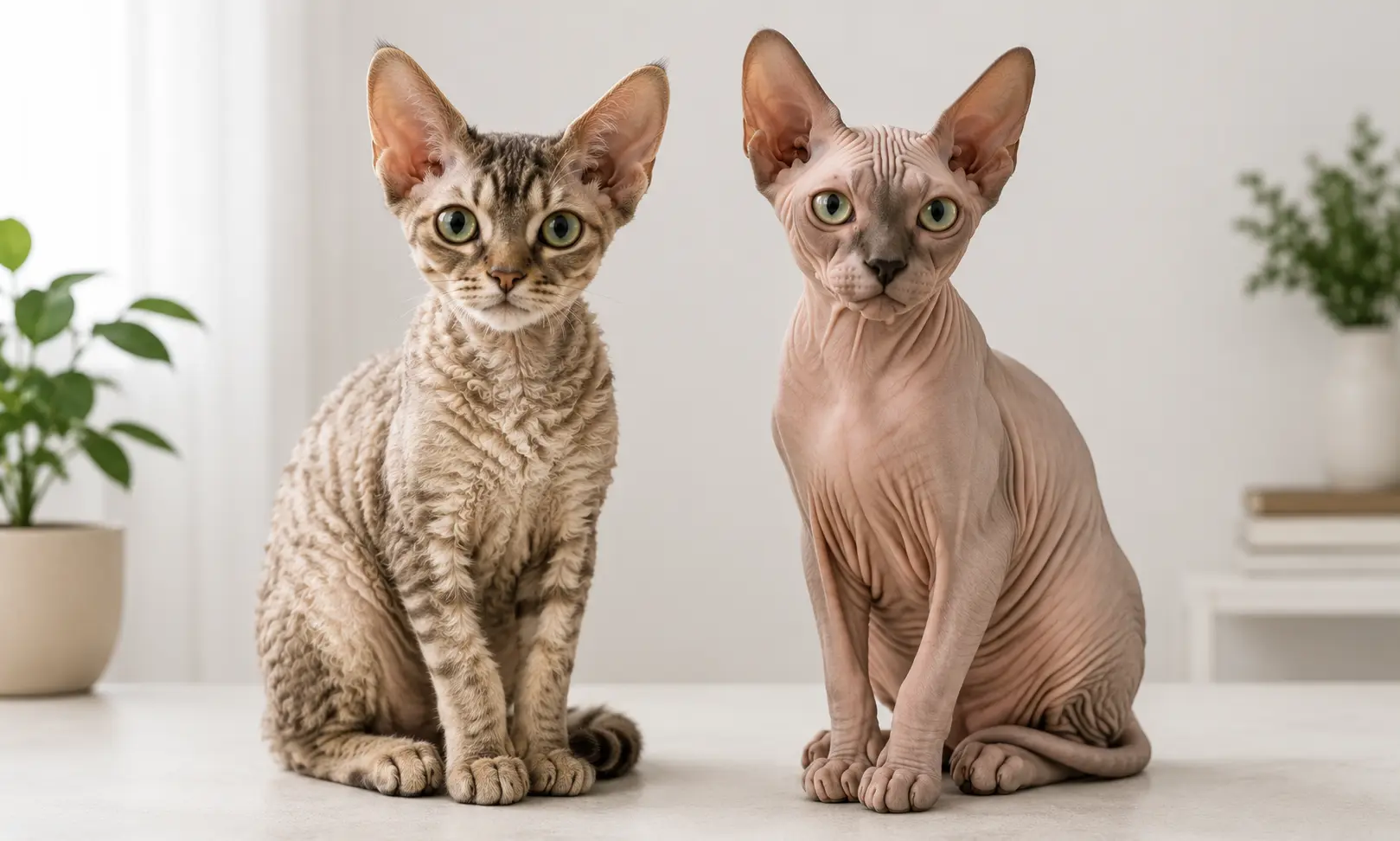
When allergy sufferers search for a feline companion, two uniquely striking breeds constantly top the shortlist: the curly-coated Devon Rex and the hairless Sphynx.
Because neither breed looks like a standard domestic cat, many people assume they are completely allergy-free. However, the biological reality of feline allergies is far more complex than just shedding fur.
In this head-to-head breakdown, we examine how the Devon Rex and Sphynx compare regarding Fel d 1 protein production, dander spread, skin oils, and maintenance demands to help you decide which breed fits your home.
Head-to-Head Comparison: Devon Rex vs. Sphynx
| Diagnostic & Lifestyle Trait | Devon Rex | Sphynx |
|---|---|---|
| Coat Type | Short, soft, curly down hair (no guard coat) | Hairless (covered in micro "peach fuzz") |
| Primary Hypoallergenic Mechanism | Low shedding limits mechanical transport of dander | Zero fur eliminates airborne hair shedding |
| Fel d 1 Protein Production | Standard to slightly reduced baseline | Standard baseline (produced in skin & saliva) |
| Shedding & Dander Spread | Very low fur shedding; minimal airborne dander | No fur shedding; dander transfers via direct skin contact |
| Skin Oil & Grooming Burden | Low grooming maintenance (gentle brushing) | High maintenance (frequent sponge baths & ear cleaning) |
| Best Suited For | Mild-to-moderate allergy sufferers who prefer low grooming | Allergy sufferers wanting zero hair, comfortable with routine baths |
The Biological Reality: Fur vs. Protein
Before comparing coat mechanics, it is essential to understand the root cause of cat allergies. As detailed in our breakdown of what causes cat allergies, human reactions are triggered primarily by the Fel d 1 protein, secreted in feline saliva, sebaceous (skin) glands, and tears.
Neither the Devon Rex nor the Sphynx possesses a universal genetic mutation that eliminates Fel d 1 production (unlike certain lines of Siberian cats). Instead, both breeds manage allergies through mechanical reduction—altering how that protein is distributed into your home environment.
1. The Devon Rex: The Low-Shedding Curly Coat
The Devon Rex is famous for its large ears, short muzzle, and uniquely soft, wavy fur.
How the Devon Rex Manages Allergens
Standard cats have three layers of coat: guard hair, awn hair, and down hair. The Devon Rex lacks functional guard hairs, possessing primarily a fragile, curly down undercoat.
- Minimal Shedding: Because their fur is so short and sparse, they shed significantly less than standard domestic cats. Less shedding means fewer allergen-coated hairs floating onto carpets, bedding, and clothes.
- Trapped Dander: What little dander they produce tends to stay trapped close to their skin beneath their soft waves rather than launching into the air (read more on cat dander vs. hair allergies).
Maintenance Demands
Devon Rex cats require minimal grooming. Oversurfacing or harsh brushing can damage their delicate waves. However, because they lack heavy outer fur to absorb skin oils, their skin can occasionally collect oil in skin folds, requiring light wiping.
2. The Sphynx: The Hairless Vector Shift
The Sphynx is the most recognizable hairless cat breed in the world, though they are actually covered in a microscopic layer of downy peach fuzz.
How the Sphynx Manages Allergens
Without a coat of fur, the Sphynx completely eliminates airborne hair shedding. When a Sphynx grooms itself, salivary Fel d 1 dries directly on its skin rather than coating thousands of individual airborne hairs.
- No Airborne Hair Vehicles: You will never find hair covered in dried salivary allergens on your furniture or clothes.
- Direct Surface Transfer: The trade-off is that dry skin cells and sebaceous oils transfer directly to surfaces through direct physical contact. If a Sphynx sleeps on your lap, sebaceous Fel d 1 transfers straight to your clothes.
Maintenance Demands
Because the Sphynx has no fur to absorb naturally produced skin oils, sebum builds up quickly. A Sphynx requires regular sponge baths (typically every 1 to 2 weeks) using mild, pet-safe shampoos, along with frequent ear cleaning and claw wiping to prevent sticky oil build-up.
Which Breed Produces Fewer Allergens?
Strictly speaking, neither breed naturally produces less baseline Fel d 1 protein than a standard cat. However, they alter how you interact with those allergens:
- Choose the Devon Rex if: You want a low-maintenance cat that keeps dander contained without requiring weekly bath routines, and your primary allergen trigger is airborne hair shedding.
- Choose the Sphynx if: You are willing to commit to strict, weekly bathing routines that actively wash away skin-bound Fel d 1 oils before they can accumulate in your environment.
Frequently Asked Questions
Are Devon Rex cats truly hypoallergenic?
No cat breed is 100% hypoallergenic. While Devon Rex cats produce standard levels of the Fel d 1 protein, their minimal shedding significantly reduces the volume of airborne dander circulating in your home, making them far easier to tolerate for mild-to-moderate allergy sufferers.
Do Sphynx cats need more skin care than other breeds?
Yes. Sphynx cats require regular sponge baths (every 1–2 weeks) to remove accumulating body oils, as well as periodic cleaning of their ears and nail beds where sebum collects. Failing to wash a Sphynx can actually increase your allergy symptoms because concentrated Fel d 1 skin oils build up on their body.
Can you be allergic to a Sphynx cat?
Yes. People who are allergic to cats react primarily to the Fel d 1 protein found in saliva and skin glands, not the hair itself. A Sphynx still secretes Fel d 1 in its saliva and skin oils, meaning direct contact with a Sphynx can trigger skin hives, sneezing, or itchy eyes.
How do I test my tolerance to a Devon Rex or Sphynx before adopting?
Arrange a visit to a registered breeder's cattery to spend 2 to 3 hours directly interacting with adult cats. Avoid taking antihistamines prior to the visit so you can accurately gauge whether direct contact triggers respiratory or cutaneous allergy symptoms.
Final Summary
- Devon Rex: Best for allergy sufferers looking for a low-shedding cat with minimal grooming demands.
- Sphynx: Best for allergy sufferers who want to eliminate hair entirely and are prepared for a consistent skin-care bathing routine.
For a broader evaluation of low-allergen cat breeds, explore our master guide to the best hypoallergenic cat breeds.