Balinese Cats and Allergies: Are They Really Low-Allergen?
Balinese cats are often called hypoallergenic. See what the evidence says about Fel d 1, their coat, and how to test one before you adopt.
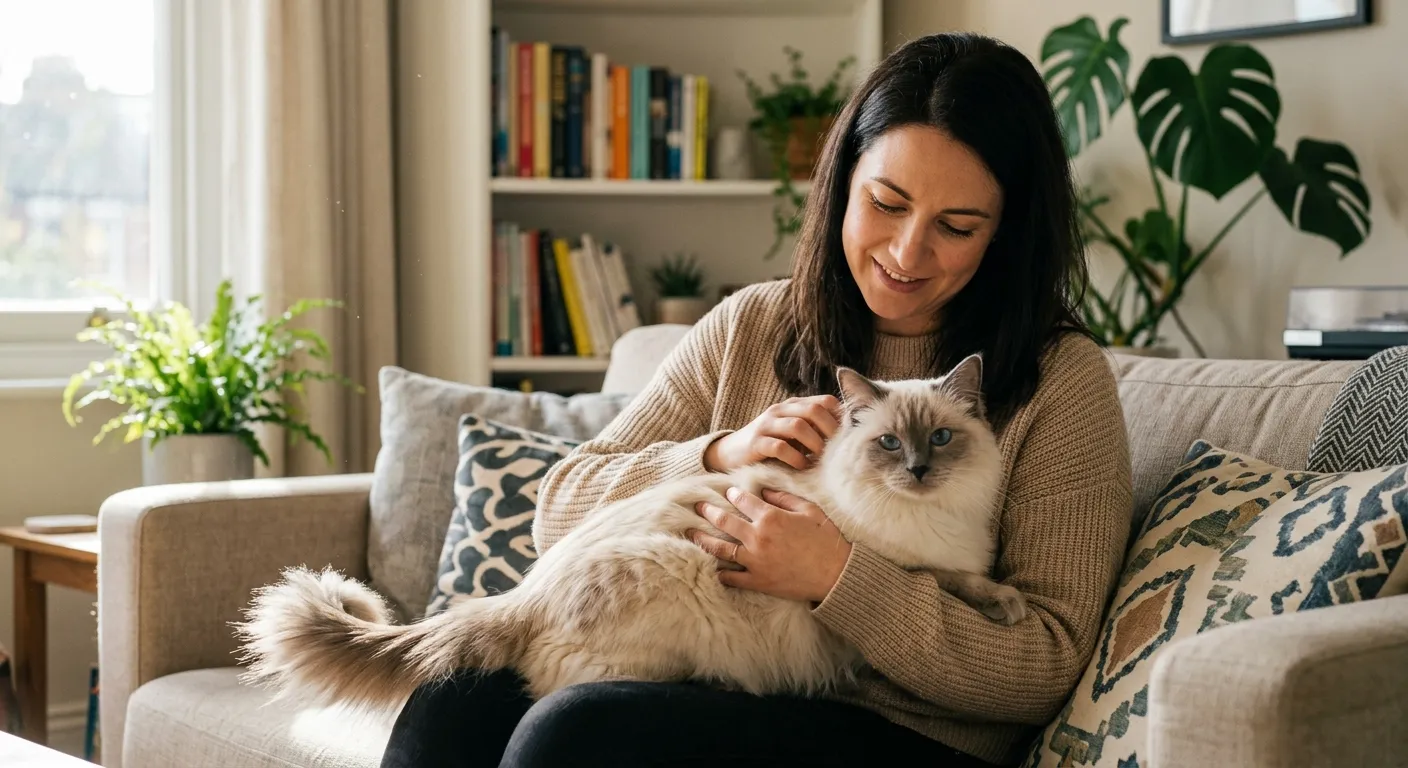
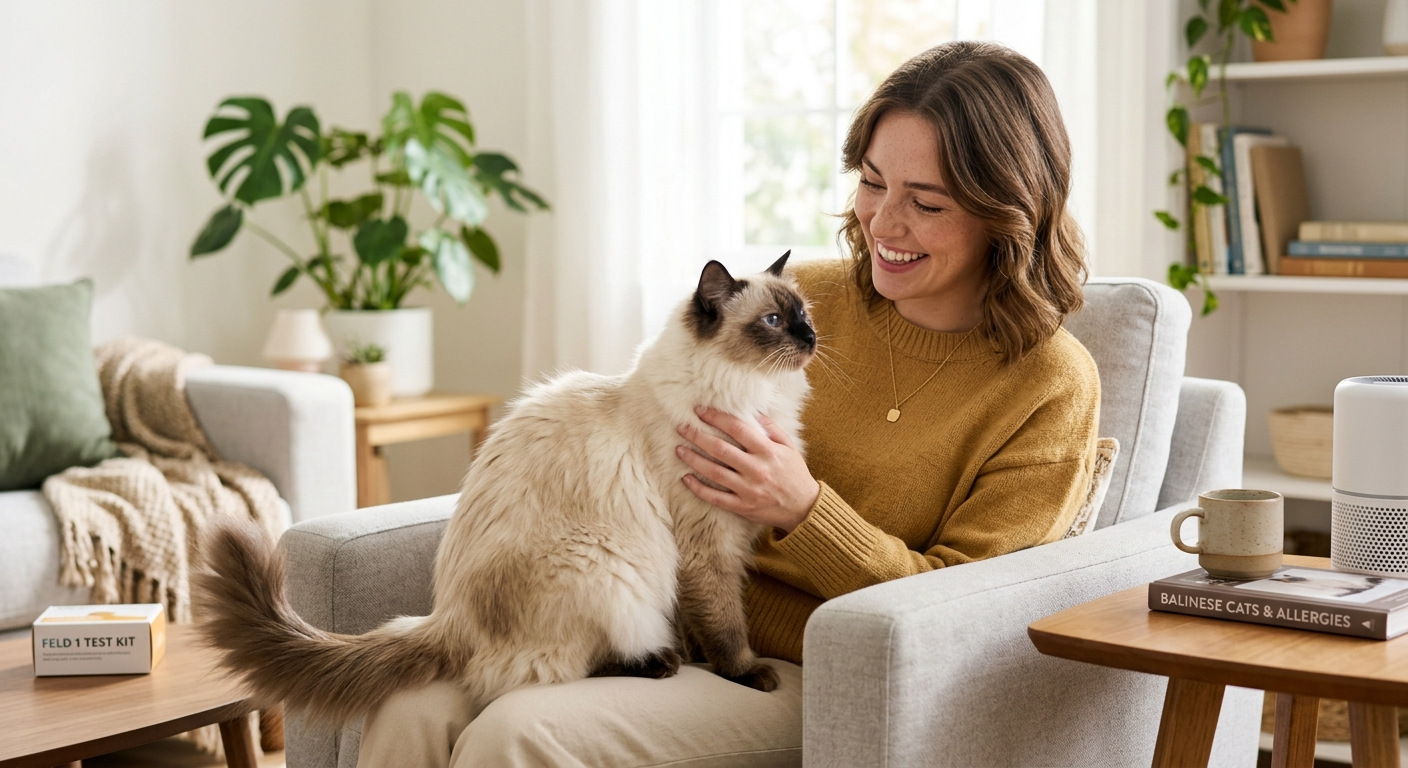
If you are wondering whether are balinese cats hypoallergenic, the short answer is no: no cat breed is completely allergen-free. While many allergic owners report tolerating Balinese cats better than other domestic felines, the evidence supporting their low-allergen reputation remains largely anecdotal. Every Balinese cat still produces Fel d 1, the primary protein responsible for cat allergies.
With their vivid blue eyes, silky coats, and affectionate personalities, Balinese cats frequently appear on lists of low-allergen breeds. However, separating marketing claims from biological reality is essential before bringing one home.
In this guide, we examine what scientific research says about Balinese cats and Fel d 1, how their single-layer coat influences allergen spread, and how to test your personal tolerance before adopting.
Quick Summary: The Balinese Allergy Profile
| Trait | Balinese Reality | Allergy Significance |
|---|---|---|
| Primary Allergen (Fel d 1) | Present in saliva, skin glands, and tears | Allergen is biologically present; claims of reduced output are unproven |
| Coat Structure | Silky, fine, single-layer coat | No woolly undercoat; traps less dander and sheds fewer loose hairs |
| Shedding Level | Low to moderate | Fewer loose hairs acting as physical carriers for dried saliva |
| Grooming Needs | Low (comb 1–2 times weekly) | Minimal matting; simple coat care reduces airborne grooming clouds |
| Temperament | Highly social, intelligent, vocal | Demands attention; loud vocalizations require consideration in apartments |
| Scientific Validation | Anecdotal / Limited | Lacks the peer-reviewed genetic data documented in Siberians |
What Is a Balinese Cat?
Despite their exotic name, Balinese cats originated in the United States during the mid-twentieth century as a naturally occurring long-haired variation of the purebred Siamese.
When long-haired kittens occasionally appeared in Siamese litters, breeders recognized their flowing grace and developed a dedicated pedigree. Early breeders chose the name "Balinese" because the cats' silhouettes recalled traditional Balinese dancers. Registries including the Cat Fanciers' Association (CFA) and The International Cat Association (TICA) officially recognize the Balinese as a championship breed.
Visually, the Balinese shares the slender frame, wedge-shaped head, large ears, and sapphire-blue eyes of the Siamese. They exhibit pointed coloration: a light fawn body accented with darker points in seal, chocolate, blue, or lilac.
The defining physical feature of the Balinese is its coat. Classified as semi-longhair, the coat lies flat against the body rather than standing out in a dense ruff. Crucially, the Balinese has a single-layer coat with no insulating down undercoat, finishing in a soft, plumed tail. However, coat texture does not eliminate the biochemical triggers of feline allergies.
Where the Low-Allergen Reputation Comes From vs. What Is Proven
To evaluate whether Balinese cats are truly low-allergen, you must understand the primary cause of feline allergies.
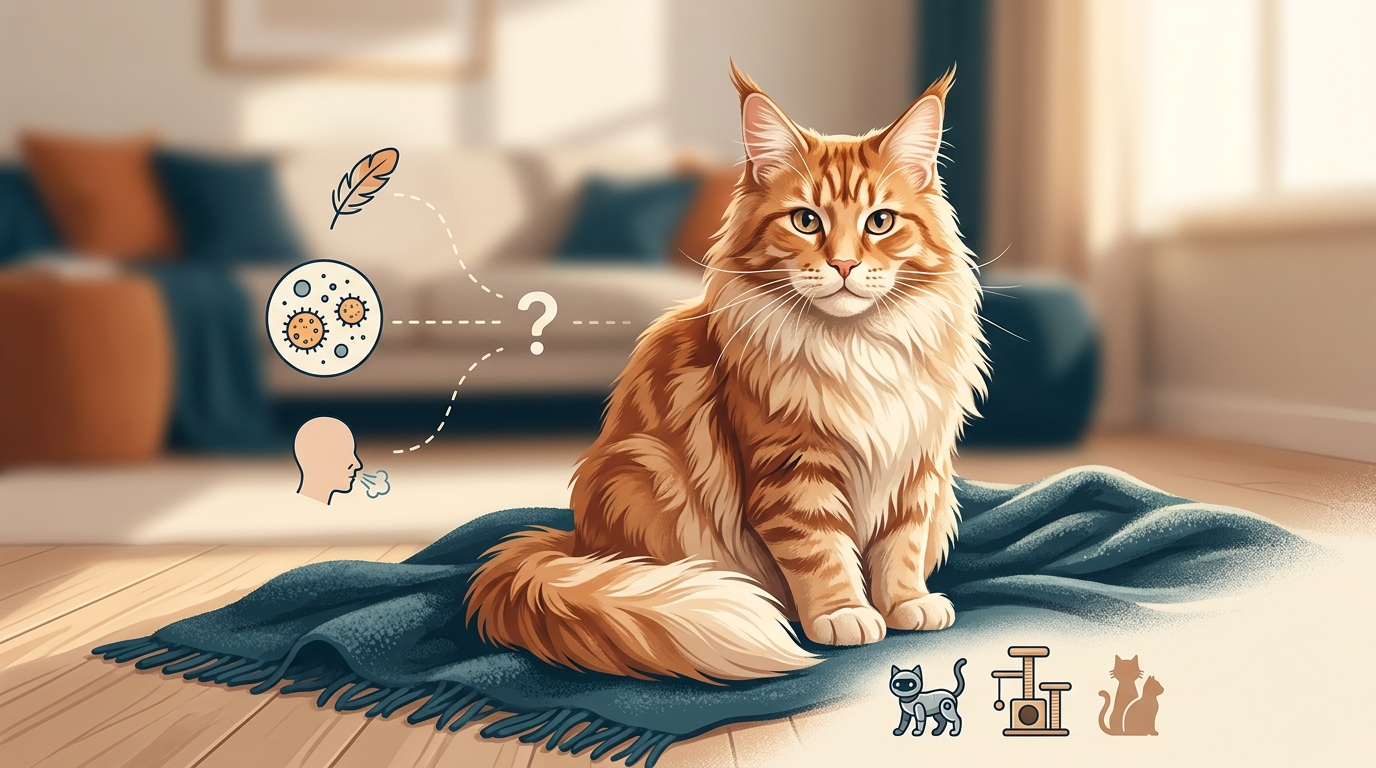
As explained in our guide on what causes cat allergies, human reactions are triggered primarily by Fel d 1, a 35 kDa secretoglobin glycoprotein produced in feline saliva, sebaceous (skin) glands, and tears. Fel d 1 accounts for up to 95% of human feline allergic responses. When a cat grooms, salivary Fel d 1 coats the fur. Once dry, it flakes off on microscopic skin dander and shed hairs.
These dander particles measure 2 to 10 microns in diameter, with fine particles under 5 microns remaining airborne for hours and triggering respiratory inflammation in sensitized individuals.
The Origin of the Low-Allergen Claim
Beginning in the late 1990s, several Balinese breeders began advertising that Balinese cats naturally produce lower amounts of salivary Fel d 1, suggesting a genetic link between the long-hair mutation and lower allergen production.
What Science Actually Confirms
When evaluated against scientific standards, this reputation remains unverified:
- No Peer-Reviewed Genetic Proof: In our analysis of Siberian cats and allergies, we note that researchers documented specific sequence variations in the Ch1 and Ch2 genes coding for Fel d 1 in certain Siberian bloodlines. By contrast, no published, peer-reviewed clinical studies demonstrate a similar breed-wide genetic suppression in Balinese cats.
- Commercial and Anecdotal Data: Most claims regarding Balinese Fel d 1 levels rely on voluntary commercial saliva swabs from individual catteries, lacking the rigorous control groups needed for scientific validation.
- Wide Individual Variation: Fel d 1 production varies widely between individual cats in all breeds. Gender and neutering status also exert a massive influence: intact males produce the highest concentrations because testosterone stimulates sebaceous glands, neutering significantly lowers production, and females generally produce the lowest baseline levels.
Some allergic people do experience fewer symptoms around Balinese cats, but this is driven by individual cat variance and coat mechanics rather than a guaranteed genetic trait.
Coat, Shedding, and Grooming Reality
If lower Fel d 1 production is unproven, why do many allergic owners tolerate Balinese cats? The primary reason lies in mechanical dander management.
Most cats have a double coat with a dense undercoat that sheds heavily, spreading allergen-coated hairs indoors.
Because the Balinese lacks an undercoat:
- Reduced Hair Shedding: They shed substantially less hair than conventional long-haired breeds like Persians or Ragdolls.
- Fewer Airborne Carriers: Fewer loose hairs floating indoors means fewer mechanical vehicles distributing dried saliva into your living space.
- Resistant to Matting: Without a woolly undercoat, their silky fur rarely mats or collects built-up dander deposits near the skin.
Cat hair is not an allergen; reactions are triggered by dried saliva and dander. While a single coat reduces shed hair, it does not stop dander production. Highly sensitive individuals will still react to microscopic dander shed from the skin.
Realistic Grooming Needs
- Weekly Combing: Gently comb through the coat once or twice weekly with a stainless-steel comb to remove loose surface hair.
- Damp Wipes: Wiping down the fur weekly with a damp microfiber cloth helps capture surface dander before it enters the air.
- Allergy Safeguards: If you are allergic, ask a non-allergic family member to handle grooming duties, ideally outdoors or in a well-ventilated space.
Temperament: Social, Vocal, and Demanding
Choosing a cat solely for allergy reasons without considering temperament often leads to frustration. The Balinese inherits the lively, extroverted personality of its Siamese ancestors.
Highly Social and People-Focused
Balinese cats form deep bonds and follow owners everywhere. Highly social and dog-like, they can develop separation anxiety if left alone for extended hours.
Vocal Communicators
Balinese cats are talkative. They possess an expressive voice and regularly converse with you about food, closed doors, or attention. If you want a quiet pet, this breed is not the right match.
Are Balinese Cats Good for Apartments?
Balinese cats adapt well to apartment life because they are active indoors and do not require outdoor access. However, keep in mind:
- Loud Meows: Their vocal nature means their calls may carry through thin shared walls, potentially disturbing close neighbors.
- Vertical Space: They are energetic climbers. Cat trees, window perches, and daily interactive play sessions are essential in compact spaces.
- Best For: People working from home, families with children or other pets, and owners who want an affectionate, deeply involved companion.
- Not Ideal For: Households where everyone is away for 10 to 12 hours a day, or owners who prefer quiet, independent cats.
To see how the Balinese compares with other breeds across lifestyle and allergy criteria, use our interactive breed matcher tool.
How an Allergic Person Should Trial a Balinese Cat
Because individual cat protein levels and human sensitivities vary, never adopt a Balinese cat without completing an in-person tolerance trial.
1. In-Person Adult Cattery Challenge
Arrange to spend at least 2 to 3 hours inside an ethical Balinese cattery interacting directly with mature adult cats.
- Test with Adults, Not Kittens: Kittens produce significantly lower amounts of Fel d 1 than sexually mature cats. Testing around kittens can provide false confidence. Always interact with adult breeding cats, particularly the parents of an upcoming litter.
- Hold Antihistamines: Avoid allergy medications before your visit (unless medically inadvisable) to observe an unmasked immune response.
- Direct Interaction: Hold the cats close to your face and allow them to rub against your skin.
2. Repeated Exposure Visits
Allergic sensitization can build over time. A second visit helps verify whether tolerance remains steady upon re-exposure.
3. The At-Home T-Shirt Test
Ask the breeder to rub a clean cotton t-shirt thoroughly over an adult Balinese and place it in a sealed zip-top bag. At home, place the cloth on your pillow or wear the shirt over 24 to 48 hours to monitor for delayed allergic reactions in your own environment.
4. Consult an Allergist
If you have allergic asthma or moderate-to-severe symptoms, consult an allergist before adopting. A specialist can perform specific IgE testing to determine your baseline sensitivity and discuss medical management strategies.
Environmental Controls: Managing Balinese Dander at Home
Even with good individual tolerance, layering home controls—detailed in our guide on how to reduce cat allergens at home—ensures long-term respiratory comfort.
1. High-Efficiency HEPA Air Filtration
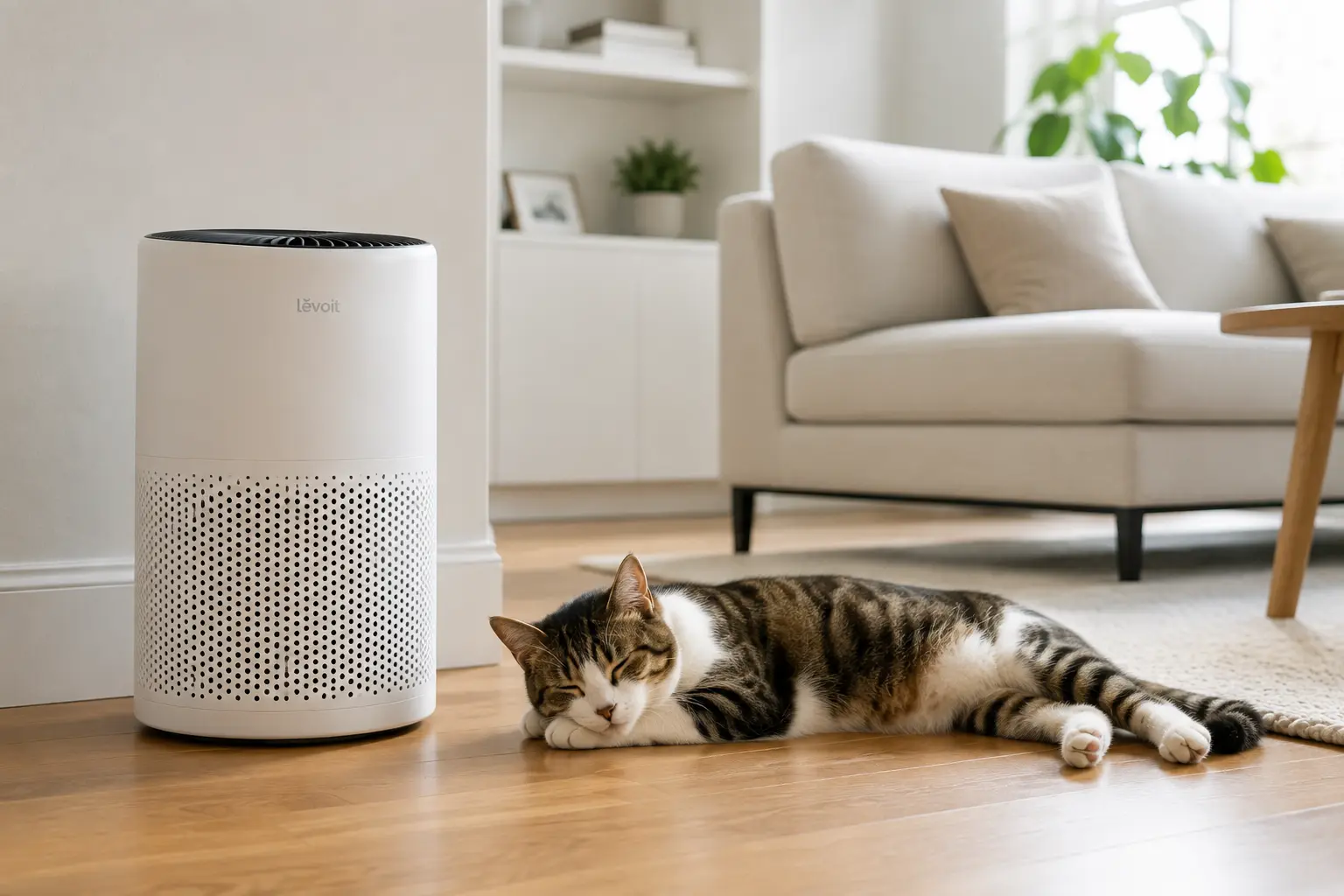
Because microscopic dander particles under 5 microns remain suspended in the air, running a True HEPA air purifier in main living rooms and bedrooms is one of the most effective interventions. True HEPA units capture at least 99.97% of airborne particles down to 0.3 microns.
2. Dietary Allergen Reduction
Allergen-reducing diets like Purina Pro Plan LiveClear use egg-derived anti-Fel d 1 IgY antibodies to neutralize active allergens in the cat's saliva during eating. Published studies show this diet reduces active Fel d 1 on hair and dander by an average of 47% starting by the third week of daily feeding.
3. Maintain a Pet-Free Bedroom
Keep your bedroom permanently off-limits to your cat. Because you spend roughly a third of your life sleeping, maintaining an allergen-free sanctuary gives your airways 7 to 8 hours of uninterrupted recovery every night.
4. High-Temperature Washing
Wash bedding, blankets, and slipcovers regularly in water heated to at least 130°F (54°C). This temperature denatures secretoglobin proteins and effectively washes away accumulated dander.
For a broader perspective on low-allergen options, review our comprehensive ranking of the best hypoallergenic cat breeds.
Key Takeaways
- No Cat Breed Is Allergen-Free: Balinese cats produce Fel d 1 in their saliva, skin oils, and tears like all felines.
- Low-Allergen Reputation Is Largely Anecdotal: Unlike Siberians, who have documented genetic mutations reducing salivary Fel d 1, Balinese cats lack peer-reviewed clinical validation.
- Single-Layer Coat Reduces Loose Hair: The absence of an undercoat means Balinese cats shed less than typical long-haired breeds, reducing the mechanical spread of dried saliva.
- Demanding, Extroverted Temperament: Balinese cats are vocal, energetic, and highly social. They need companionship and mental stimulation to thrive.
- Personal Trials Are Essential: Always test your reaction with adult cats over multiple visits and use an at-home cloth trial before committing to adoption.
Sources
- Bonnet, B., et al. (2018). "An update on molecular cat allergens: Fel d 1 and beyond." Allergy, Asthma & Clinical Immunology, 14, 7.
- Satyaraj, E., et al. (2019). "Anti-Fel d 1 immunoglobulins reduce active allergen in cat saliva and dander." Journal of Feline Medicine and Surgery, 21(10), 958–965.
- American Academy of Allergy, Asthma & Immunology (AAAAI). "Pet Allergy Overview, Diagnosis, and Management."
- American College of Allergy, Asthma & Immunology (ACAAI). "Cat Allergies: Management and Environmental Controls."
- Cat Fanciers' Association (CFA). "Balinese Breed Profile and Championship Standard."
- The International Cat Association (TICA). "Balinese Breed Standard and History."