Cornish Rex and Allergies: Low Shedding Is Not the Same as Low Allergen
The Cornish Rex has a fine, wavy coat and sheds little. Here is why that does not make it allergen-free, and who it can still suit.
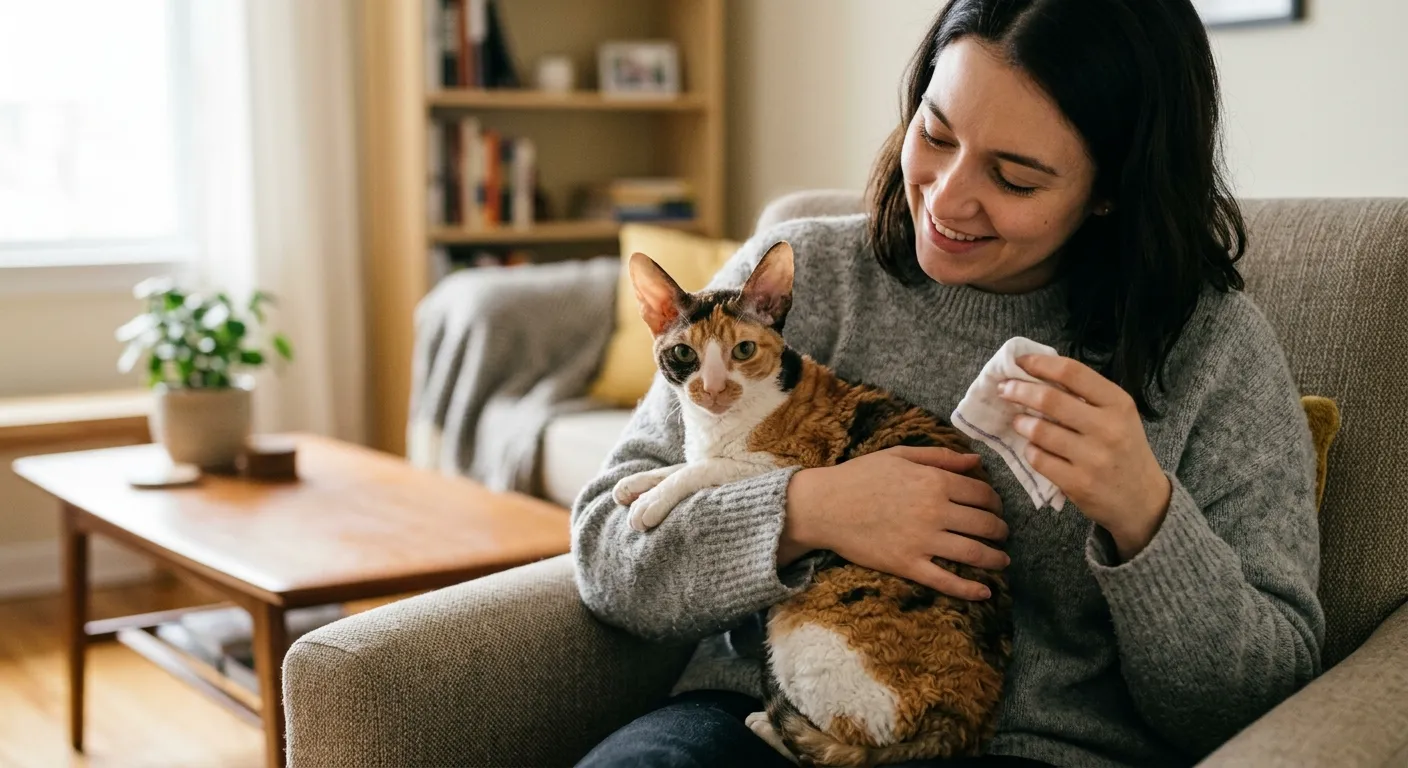
If you are researching whether the cornish rex hypoallergenic claim is true, the straightforward answer is no: the Cornish Rex is not allergen-free, and low shedding is not the same as low allergen. While their ultra-fine, rippled coat sheds far less hair than that of standard felines, Cornish Rex cats still produce Fel d 1, the primary protein responsible for cat allergies.
With their slender, greyhound-like silhouettes, large bat-wing ears, and signature marcel-waved fur, the Cornish Rex looks entirely distinct from standard domestic cats. Because of their sparse coat and minimal shedding, they frequently appear near the top of lists recommending cats for allergy sufferers. However, confusing hair volume with biochemical allergen production can lead to unexpected symptoms if you adopt without understanding the facts.
In this guide, we break down the unique genetics of the Cornish Rex coat, explain why hairless or low-shedding coats still produce dander, evaluate their grooming needs, compare them to the Devon Rex, and outline how to test your personal sensitivity before adopting.
Quick Summary: The Cornish Rex Allergy Profile
| Trait | Cornish Rex Reality | Allergy Impact & Significance |
|---|---|---|
| Fel d 1 Secretion | Standard biological baseline | Protein is present in saliva and skin glands; no genetic suppression |
| Coat Structure | Very short, fine, wavy down undercoat | Lacks outer guard hairs; sheds very little visible hair |
| Shedding Level | Extremely low | Minimal loose fur acting as mechanical transport for dried saliva |
| Skin Oil Dynamics | Accumulates sebum faster than heavy-coated breeds | Skin-bound Fel d 1 can transfer directly to hands during petting |
| Grooming Needs | Low (gentle damp wipe-downs) | Over-brushing can damage delicate waves; over-bathing causes dry skin |
| Temperament | Playful, acrobatic, heat-seeking | Highly social and active; craves constant human proximity and warmth |
The Cornish Rex Coat: Anatomy of the Marcel Wave
To understand why the Cornish Rex sheds so little, you must understand feline coat biology.
Standard domestic cats have three distinct layers of fur:
- Guard Hairs: The coarse, protective outer layer that repels moisture.
- Awn Hairs: The intermediate insulating layer.
- Down Hairs: The fine, soft, woolly undercoat closest to the skin.
The Cornish Rex originated in Cornwall, England, in 1950 from a spontaneous recessive genetic mutation. This mutation fundamentally altered their follicular architecture: the Cornish Rex lacks guard hairs and awn hairs entirely, possessing only a down undercoat.
Their coat is exceptionally short, fine, and lies close to the body in tight, uniform ripples resembling the "marcel wave" hairstyles popular in the 1920s. Even their whiskers and eyebrows are short and crinkled. Because down hair is delicate and short, shed hairs are practically invisible on rugs and clothing. However, while this unique coat alters hair dynamics, it does not alter allergen biochemistry.
Shedding vs. Allergen: Why Hair Length Does Not Equal Low Allergen
A common misconception among pet lovers is that cat hair is the allergen. If a cat sheds very little hair, the logic goes, it must produce fewer allergies. Feline immunology proves otherwise.
As detailed in our medical guide on what causes cat allergies, human reactions are triggered primarily by Fel d 1, a 35 kDa secretoglobin glycoprotein synthesized in feline salivary, sebaceous (skin), and lacrimal (tear) glands. Fel d 1 accounts for up to 95% of human feline allergic responses.
When a cat grooms itself, it deposits salivary Fel d 1 onto its coat. As the saliva dries, the protein binds to microscopic flakes of dead skin called dander. As explored in our deep dive on cat dander vs. hair allergies, dander particles measure between 2 and 10 microns in diameter, with fine particles under 5 microns remaining airborne for hours.
+--------------------------------------------------------------------------+
|                  THE LOW-SHEDDING MISCONCEPTION                          |
|                                                                          |
|  [What the Cornish Rex Lacks]  Guard hairs, awn hairs, heavy shedding    |
|  [What the Cornish Rex Retains] Active salivary and sebaceous Fel d 1    |
|  [The Transfer Vector]         Microscopic dander & direct skin contact  |
+--------------------------------------------------------------------------+
Because a Cornish Rex sheds so little fur, fewer loose hairs drift through your home carrying dried saliva into your carpets and upholstery. For individuals whose allergies are triggered primarily by ambient hair floating in the room, this mechanical reduction can provide noticeable comfort.
However, the Cornish Rex still sheds dead skin cells, and its saliva still contains potent Fel d 1. If you hold a Cornish Rex or let it rub against your face, concentrated allergens transfer directly to your skin.
Skin Oils, Wiping, and Bathing: What Owners Need to Know
Because the Cornish Rex lacks coarse outer fur to absorb the natural sebum produced by its sebaceous glands, managing skin oils requires thoughtful care:
The Accumulation of Skin Sebum
In standard cats, outer guard hairs act like a sponge, absorbing oils as they secrete from the skin. In the Cornish Rex, natural oils remain concentrated directly on the skin surface. Because sebaceous glands secrete Fel d 1 alongside sebum, direct petting transfers oily allergens straight onto your hands.
Safe Maintenance Guidance
- Damp Microfiber Wipes: Wiping the coat once or twice weekly with a damp microfiber cloth or a fragrance-free, cat-safe wipe helps remove surface oils and settled dander without irritating the skin.
- Avoid Frequent Water Baths: Many owners mistakenly believe they should wash their Cornish Rex weekly. Unless advised by your veterinarian for a specific medical condition, frequent water baths strip natural lipid barriers, causing dry, itchy skin, increased scratching, and more airborne dander.
- Clean Skin Folds and Paws: Sebum can accumulate around the nail beds, between the toes, and inside large ear canals. Gently wiping these areas with a soft cloth prevents oily buildup.
- Consult Your Veterinarian: If your Cornish Rex develops red skin, flaking, or excessive scratching, consult your veterinarian to evaluate for underlying dermatological conditions.
Cornish Rex vs. Devon Rex: Two Different Breeds
People frequently confuse the Cornish Rex with the Devon Rex, assuming they are simply variations of the same curly-coated cat. In reality, they are two genetically distinct breeds that arose from completely separate natural mutations.
The Cornish Rex mutation is designated as gene r, while the Devon Rex mutation is designated as gene re. If you breed a purebred Cornish Rex with a purebred Devon Rex, all resulting kittens will have completely straight, normal coats because the two recessive mutations do not cross-complement each other.
Visually and structurally, their coats differ noticeably:
- Cornish Rex Coat: Consists solely of a down undercoat forming tight, uniform washboard ripples with no guard hairs.
- Devon Rex Coat: Retains a sparse outer guard coat and intermediate awn hairs, resulting in a looser, more open, suede-like curl.
For a detailed evaluation of how the Devon Rex compares against hairless felines for allergy management, explore our comprehensive guide on the Devon Rex vs. Sphynx for allergies.
Temperament and Needs: Active, Social, and Heat-Seeking
Living with a Cornish Rex is an energetic experience. They are lively, acrobatic companions that remain playful well into adulthood.
Boundless Energy and Athletic Agility
Cornish Rex cats possess long, spring-like legs and arched backs, enabling them to leap effortlessly to the tops of refrigerators, doors, and bookshelves. They are intensely curious and love interactive games like fetch, puzzle toys, and agility courses. If you prefer a sedentary cat that rests quietly on a rug, the Cornish Rex will likely exhaust you.
Affectionate and People-Oriented
They crave human company and despise being isolated. Often called "velcro cats," they ride on their owners' shoulders, burrow under bed covers, and insist on participating in every household task.
The "Heat-Seeking" Trait
Because they lack insulating guard hairs and heavy undercoats, Cornish Rex cats have less thermal insulation than standard cats. Their skin feels remarkably warm to the touch (often compared to a hot water bottle), and they actively seek out warm environments:
- Radiator tops and sunbeams
- Heated cat beds and laptop keyboards
- Tucking themselves under blankets right against your body
Household Fit and Pre-Adoption Allergy Trials
Because human sensitivity varies and individual cats produce different allergen concentrations, you should never adopt a Cornish Rex without direct in-person testing.
Step 1: In-Person Cattery Visit (Spend 2–3 hours with adult cats)
                             │
                             ▼
Step 2: Second Exposure Visit (Rule out delayed sensitization)
                             │
                             ▼
Step 3: At-Home Scent Trial (Sleep near a dander-rubbed cloth)
                             │
                             ▼
Step 4: Clinical Guidance (Discuss findings with an allergist)
1. In-Person Adult Cattery Challenge
Arrange to spend at least 2 to 3 hours inside an ethical Cornish Rex cattery interacting directly with mature adult cats:
- Test Around Adults: Kittens produce significantly lower baseline Fel d 1 than sexually mature cats. Testing around kittens can provide false confidence; always interact with adult cats.
- Hold Antihistamines: Avoid allergy medications before your visit (unless medically inadvisable) to ensure you observe an unmasked immune response.
- Direct Skin Contact: Handle the cats, let them rub against your hands and neck, and monitor for localized hives or nasal congestion.
2. Multi-Visit Verification and At-Home Cloth Trial
Allergic sensitization can escalate with repeated exposure. Scheduling a follow-up visit ensures your tolerance is genuine. Additionally, ask the breeder for a clean cotton cloth rubbed over the adult cats and place it near your pillow for 24 to 48 hours to check for delayed overnight reactions.
To evaluate how the Cornish Rex aligns with your lifestyle and allergy profile compared to other breeds, explore our interactive breed matcher tool.
Environmental Controls: Managing Cornish Rex Allergens at Home
Even with a low-shedding cat, dander naturally accumulates indoors. Pairing your pet with proactive environmental controls ensures long-term comfort:
- True HEPA Air Purification: Place a True HEPA air purifier in high-traffic rooms and the bedroom. HEPA filters capture 99.97% of airborne particles down to 0.3 microns, continuously capturing buoyant dander.
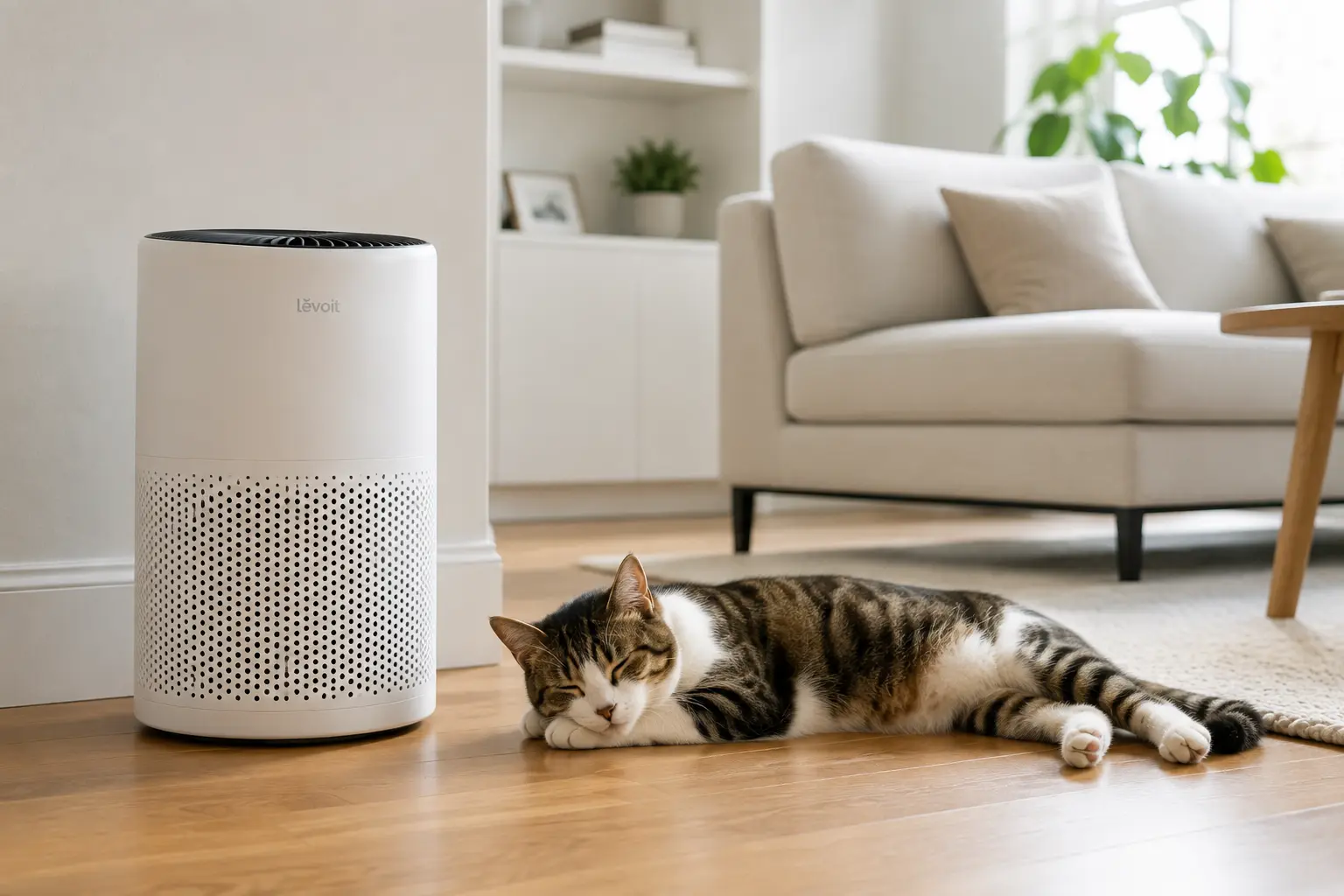
- Establish a Pet-Free Bedroom: Keep your bedroom door closed 24/7. Preventing your cat from sleeping in your bed gives your respiratory system 7 to 8 hours of uninterrupted recovery each night.
- High-Temperature Bedding Care: Wash blankets and slipcovers regularly in water heated to at least 130°F (54°C) to denature secretoglobin proteins and dissolve water-soluble allergens.
For a broader ranking of lower-allergen breeds, review our master comparison of the best hypoallergenic cat breeds.
Key Takeaways
- Low Shedding Is Not Low Allergen: The Cornish Rex sheds very little hair, but still produces standard levels of the primary Fel d 1 protein in its saliva and skin glands.
- Unique Single Down Coat: The breed lacks guard and awn hairs entirely, possessing only a fine, wavy undercoat that leaves minimal loose fur on home surfaces.
- Sebum Management Matters: Because they lack outer fur to absorb skin oils, natural sebum collects on the skin; gentle damp wiping is better than frequent water baths.
- Genetically Distinct from Devon Rex: The Cornish Rex is a completely different genetic mutation from the Devon Rex, featuring tight washboard ripples rather than open, loose curls.
- Perform Rigorous Pre-Adoption Testing: Always test your sensitivity with mature adult cats over multiple visits and use an at-home cloth trial before committing to adoption.
Sources
- Bonnet, B., et al. (2018). "An update on molecular cat allergens: Fel d 1 and beyond." Allergy, Asthma & Clinical Immunology, 14, 7.
- Cat Fanciers' Association (CFA). "Cornish Rex Breed Profile and Championship Standard."
- The International Cat Association (TICA). "Cornish Rex Breed Standard and History."
- American Academy of Allergy, Asthma & Immunology (AAAAI). "Pet Allergens: Exposure, Mechanisms, and Environmental Mitigation."