Best Cat Wipes and Grooming Tools for Allergy Households
Can wipes and brushing reduce cat allergens at home? What the evidence supports, how to groom safely, and the tools worth considering.
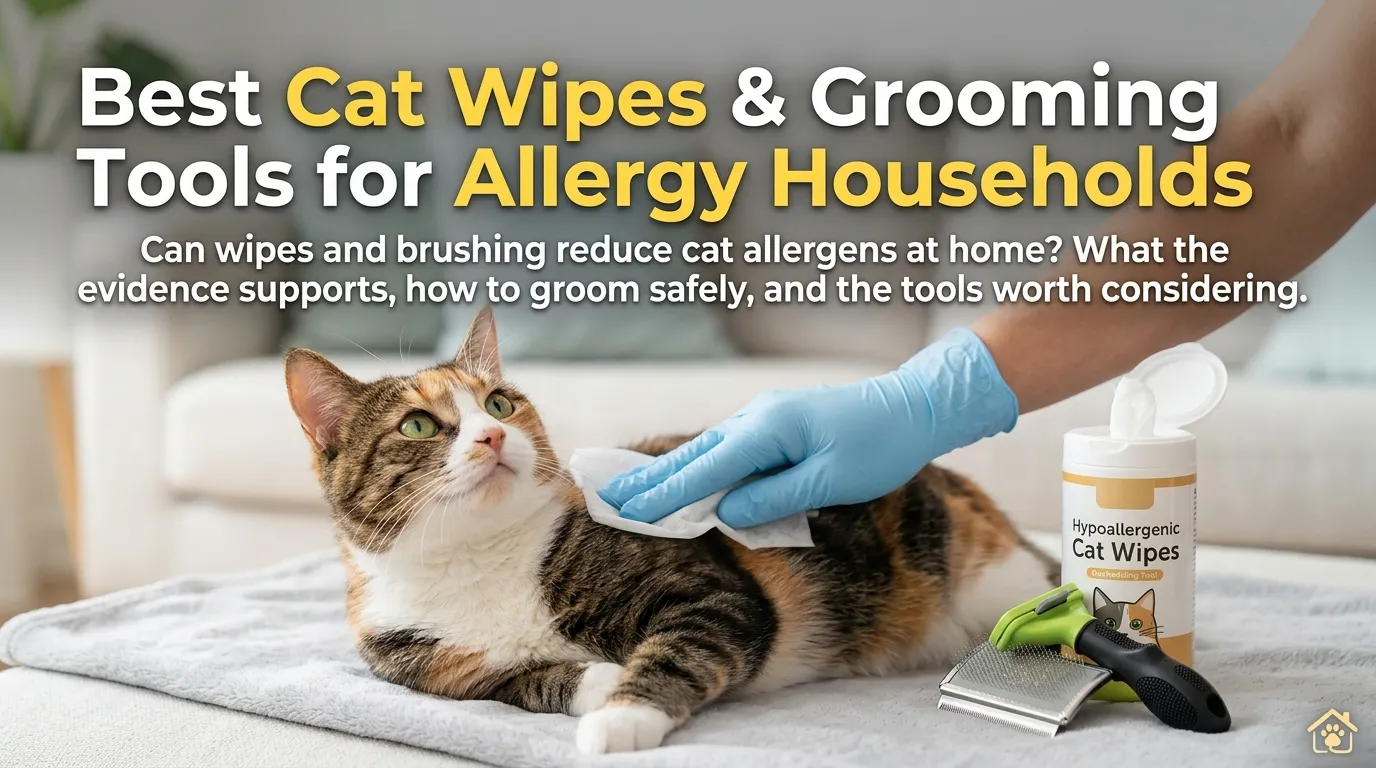
If you are researching whether cat wipes for allergies and grooming tools can relieve your symptoms, the direct answer is that regular wiping and brushing may reduce loose surface dander on fur, but evidence of meaningful clinical symptom relief is limited. Grooming tools simply lift away loose hair and dried salivary proteins that have already accumulated on the coat; they do not alter the biological rate at which your cat secretes allergens.
Living with cat allergies often leads pet owners to seek topical solutions. From hypoallergenic dander wipes to specialized de-shedding rakes and grooming gloves, pet care aisles are filled with products claiming to neutralize feline allergens. However, navigating the difference between realistic dander control and overblown claims is vital to protecting both your respiratory health and your cat's delicate skin.
In this guide, we evaluate whether grooming products genuinely help cat allergy sufferers, outline essential feline skin safety rules, compare recommended tool categories, and share safe grooming protocols for sensitive households.
Do Cat Wipes and Grooming Tools Actually Work?
To understand what grooming can and cannot achieve, we must examine how feline allergens distribute across a cat's body.
As established in feline immunology, up to 95% of human reactions to cats are driven by Fel d 1, a 35 kDa secretoglobin protein produced primarily in feline sebaceous (skin) glands, salivary glands, and tear ducts. When a cat grooms itself, salivary Fel d 1 spreads across the fur. As that saliva dries, it flakes off on microscopic epithelial cells known as dander. These tiny particles measure between 2 and 10 microns, with fine particles under 5 microns floating freely in household air for hours.
The Realistic Impact of Topical Wipes
Damp wiping functions as a purely mechanical intervention:
- What Wipes Do: A moist, textured pet wipe physically captures loose surface hairs, dried salivary flakes, and superficial dander before they detach into room air.
- What Wipes Cannot Do: Wipes cannot penetrate deep into the dermal sebaceous glands where Fel d 1 originates. Within hours of being wiped down, a cat will groom itself again, redepositing fresh salivary proteins across its coat.
Small-scale published studies evaluating topical wiping and washing show that while wiping can temporarily reduce surface Fel d 1 levels on the hair shaft, protein concentrations consistently rebound to baseline within 24 to 48 hours. For mild allergy sufferers, this temporary reduction can decrease the allergen payload transferred during direct handling. For individuals with moderate to severe allergic asthma, however, topical wiping alone is rarely sufficient to prevent symptoms.
Feline Safety First: Avoiding Skin Damage and Toxicity
Before introducing any topical product to your cat's routine, you must prioritize feline physiology. Cats have delicate skin with a neutral pH (around 6.0 to 7.5), which is thinner and more sensitive than human skin. Furthermore, because cats spend up to 30% to 50% of their waking hours grooming, anything applied to their coat will inevitably be ingested.
+--------------------------------------------------------------------------+
|                       FELINE GROOMING SAFETY CHECKLIST                   |
|                                                                          |
|  [Cat-Specific Only]  Never use human wipes, baby wipes, or makeup removers|
|  [Zero Fragrance]     Avoid essential oils, tea tree, lavender, & perfumes|
|  [No Alcohol/Dyes]    Look for hypoallergenic, water-based formulations   |
|  [Gentle Pressure]    Do not scrape or irritate the dermal barrier       |
|  [Vet Consultation]   Ask your vet if your cat has eczema or flaking skin |
+--------------------------------------------------------------------------+
1. Avoid Human Products Entirely
Never use human baby wipes, facial cleansing cloths, or household antibacterial wipes on a cat. Human products frequently contain alcohols, propylene glycol, synthetic perfumes, and astringents that dry out feline skin and can cause toxic poisoning if licked off the fur.
2. Beware of Essential Oils
Many commercial pet products marketed as "natural" contain essential oils such as tea tree (melaleuca), lavender, eucalyptus, citrus, or peppermint for scent. Essential oils are toxic to cats. Feline livers lack the specific glucuronyl transferase enzymes required to metabolize and eliminate the compounds found in essential oils. Ingestion or dermal absorption can lead to liver toxicity, respiratory distress, and neurological depression. Always choose strictly fragrance-free, unscented formulations.
3. Do Not Over-Bathe
Some owners attempt to submerge their cats in weekly baths to wash away allergens. Unless you own a hairless breed like the Sphynx—which requires routine sponge baths to manage concentrated skin sebum—frequent water baths strip protective lipid layers from the skin. Dry, stripped skin becomes inflamed, leading to increased flaking, scratching, and ultimately more airborne dander, not less.
Recommended Tools for Allergy-Sensitive Households
When selecting grooming aids to reduce ambient dander, combine gentle surface wipes with effective mechanical brushing tools based on manufacturer specs and published ratings.
Burt's Bees for Pets Dander Reducing Wipes for Cats — Best Gentle Coat Wipes
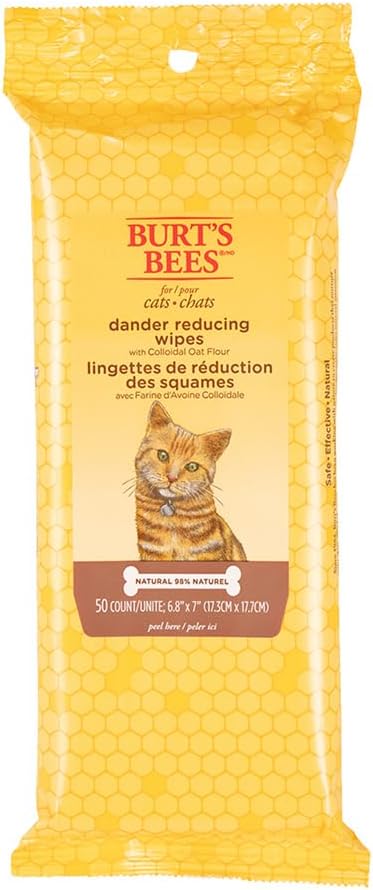
Burt's Bees for Pets Dander Reducing Wipes for Cats are designed to help reduce visible dander and flaking while conditioning your cat's coat. Formulated with 98.5% natural ingredients, they offer a low-stress way to wipe away dried salivary Fel d 1 and loose hairs before they launch into the air.
Key Highlights
- Skin-Nourishing Ingredients: The formula includes colloidal oat flour and aloe vera to moisturize the epidermal barrier and calm irritated, dry skin.
- pH Balanced for Felines: Specifically formulated for cat skin pH, avoiding the dryness and irritation caused by human wipes.
- Safe for Grooming: Sulfate-free, fragrance-free, and colorant-free, ensuring residue is safe when cats engage in natural self-grooming.
- Textured Fabric: Soft, durable wipes lift away surface dander without pulling hair or irritating sensitive skin.
Pros
- Gentle formula enriched with soothing colloidal oat flour and aloe vera.
- Helps lift away loose dander and dried saliva without water bathing stress.
- Safe, non-toxic formulation suitable for routine 2–3 times weekly wipe-downs.
Cons
- Captures surface allergens only temporarily; does not stop underlying Fel d 1 production.
Tool Categories Compared: Wipes vs. Brushes vs. Gloves
Each grooming tool serves a distinct mechanical purpose in controlling household allergen spread.
| Tool Category | Primary Mechanism | Allergen Control Benefit | Feline Tolerance | Best Application |
|---|---|---|---|---|
| Hypoallergenic Wipes | Moist cellulose fibers lift surface dander and saliva | Traps surface proteins before they launch into household air | High (feels like petting) | Quick wipe-downs 2–3 times weekly after petting sessions. |
| Undercoat De-Shedding Rakes | Fine stainless steel teeth reach beneath guard hairs | Removes dead down hair before it molts across carpets | Moderate (requires gentle touch) | Weekly maintenance for double-coated breeds during seasonal shedding. |
| Grooming Gloves / Mitts | Silicone nodules trap loose hairs while stroking | Captures loose hair while mimicking natural soothing touch | Very High (ideal for anxious cats) | Daily relaxation brushing for cats that fear metal brushes. |
| Stainless Steel Fine Combs | Smooth rounded pins gently part single-layer coats | Detangles silky fur and gathers dead hair without pulling | High | Ideal for fine-coated breeds like the Balinese or Russian Blue. |
Who Should Groom and How: The Low-Exposure Protocol
Brushing and wiping a cat mechanically dislodges loose hair and dander. If an allergic person brushes a cat indoors without protection, they are subjecting themselves to an acute burst of airborne Fel d 1.
Follow this protective protocol to minimize exposure during grooming:
1. Delegate to a Non-Allergic Family Member
Whenever possible, grooming should be performed by someone in the home who does not suffer from cat allergies. This single step removes the primary exposure window for the sensitive individual.
2. Groom Outdoors or in a Well-Ventilated Space
Never brush your cat in the bedroom, living room, or on upholstered furniture. Conduct grooming sessions outdoors on an enclosed patio or balcony. If outdoor grooming is impossible, use a bathroom or laundry room with hard tile flooring and an active exhaust fan to draw floating particulates out of the room.
3. Wear Personal Protective Equipment (PPE)
If the allergic individual must handle grooming:
- Wear a well-fitted N95 or FFP2 particulate respirator to block microscopic dander particles down to 0.3 microns.
- Wear lightweight disposable gloves or a dedicated grooming mitt to prevent direct contact with dried saliva on the hair shafts.
- Wear an easily washable overshirt or apron that can be removed and laundered immediately after grooming.
4. Post-Grooming Clean Up
- Wipe down hard grooming surfaces with a damp microfiber cloth to collect fallen hairs (dry sweeping merely stirs settled dander back into circulation).
- Vacuum the immediate grooming area using a vacuum equipped with a sealed True HEPA exhaust system, such as those evaluated in our best HEPA vacuum for pet hair guide.
- Wash hands, forearms, and face with warm water and soap immediately following the session.
What Grooming Tools Cannot Do
While incorporating pet wipes and de-shedding mitts into your weekly routine helps keep loose fur under control, it is essential to maintain realistic expectations regarding their limits:
- They Do Not Cure Cat Allergies: No wipe, brush, spray, or water bath cures human allergy sensitization. If you have an established IgE immune response to Fel d 1, coming into contact with an active cat will continue to trigger symptoms.
- They Do Not Stop Dander Regeneration: Cat skin naturally sheds microscopic dead skin cells 24 hours a day as part of normal epidermal turnover. Wiping your cat on Monday morning provides no protection against dander shed by Tuesday afternoon.
- They Cannot Replace Environmental Filtration: Because fine dander particles under 5 microns remain suspended in the air for hours, air filtration and room isolation remain non-negotiable.
To achieve lasting relief, grooming tools should be treated as a modest supportive measure within a broader management system. Pair grooming with comprehensive environmental controls—as detailed in our master blueprint on how to reduce cat allergens at home—including high-efficiency air purifiers and allergen-free bedroom protocols.
Key Takeaways
- Supportive, Not Curative: Cat wipes and de-shedding brushes remove loose fur and surface saliva, but clinical evidence of long-term allergy symptom reduction is limited.
- Prioritize Feline Safety: Use strictly fragrance-free, cat-specific products. Avoid essential oils, alcohol, and human baby wipes, all of which pose toxic or dermatological risks to cats.
- Protect the Allergic Person: Brushing releases acute bursts of airborne dander. Have a non-allergic person groom the cat, conduct sessions outdoors or in a ventilated space, and wear an N95 mask if sensitive.
- Do Not Over-Bathe: Frequent water baths dry out feline skin, causing inflammation, increased scratching, and higher dander shedding. Gentle wiping 2 to 3 times weekly is far safer.
- Combine with Proven Defenses: Grooming is most effective when paired with True HEPA air filtration, sealed vacuuming, and pet-free sleep sanctuaries.
Sources
- Bonnet, B., et al. (2018). "An update on molecular cat allergens: Fel d 1 and beyond." Allergy, Asthma & Clinical Immunology, 14, 7.
- Avner, D. B., et al. (1997). "Evaluation of washing and wiping cats as methods for reducing Fel d 1 in the home." Journal of Allergy and Clinical Immunology, 100(3), 307–312.
- American Academy of Allergy, Asthma & Immunology (AAAAI). "Pet Allergen Management and Avoidance Strategies."
- American Society for the Prevention of Cruelty to Animals (ASPCA). "Animal Poison Control: Essential Oil Toxicity in Felines."